Welcome to the Department of Mathematics and Computer Science
The Department of Mathematics and Computer Science of Eindhoven University of Technology is a place that brings motivated students, lecturers and researchers together. We train high-caliber students and conduct pioneering scientific research and our in-depth knowledge of mathematics and computer science enables us to find solutions to issues that exist within society.
We are privileged to form part of Brainport, the world's smartest region, and we maintain good contacts with the regional business community and authorities. Thanks to these collaborative partnerships, we offer exceptional future prospects to all who collaborate with us.
Events
EIRES Lunch Lecture
12h00-13h00 | Topic: The Iron Power Cycle, status and next steps
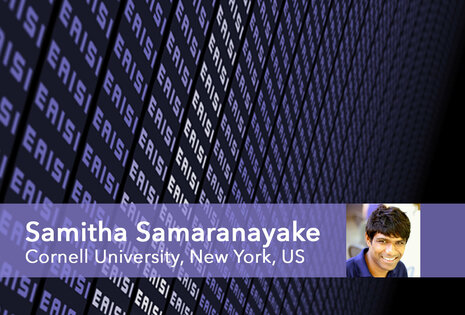
EAISI lecture by visiting Professor Samitha Samaranayake
Models and Algorithms for Transit Centric Urban Mobility | Helping Better Buses make Better Cities
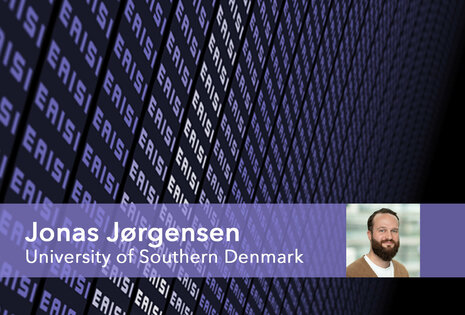
EAISI lecture by visiting Professor Jonas Jørgensen
Matter and Meaning: Towards A Soft Science of Soft Robots
EIRES Lunch Lecture
12h00-13h00 | Topic: The energy transition: a human-centered perspective towards tipping
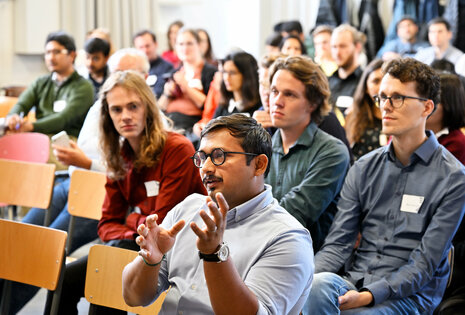
Leuven.AI scientific workshop 2024
The second Leuven.AI scientific workshop will zoom in on two perspectives on science and AI.
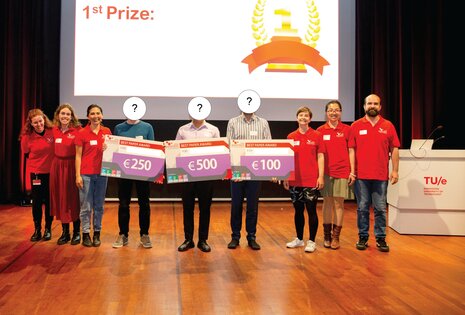
PDA Best Paper Award 2024
May 27, 2024 4:00 PM / TU/e campus (Blauwe Zaal, Auditorium)
![[Translate to English:]](https://assets.w3.tue.nl/w/fileadmin/_processed_/a/8/csm_Screenshot%20intersect%202024_3d2e702e2f.jpg "[Translate to English:]")
2024 INTERSCT.Conference on Cyber Security of Internet-of-Things
May 28, 2024 9:00 AM / Auditorium
ICAI DAY – exploring AI’s impact on society
June 5, 2024 12:00 PM / Erasmus Campus, Burgemeester Oudlaan 50, Rotterdam

MedTech Day 2024
June 7, 2024 9:30 AM / Eindhoven University of Technology

EAISI jubilee AI Symposium
Symposium in honor of EAISI's fifth jubilee during which research findings of EAISI's funding programs will be presented.

EnergyDays
Topic t.b.c.
![[Translate to English:]](https://assets.w3.tue.nl/w/fileadmin/_processed_/8/c/csm_Data%20in%20Health%20shutterstock_1236001516_dc21b3c5bb.jpg "[Translate to English:]")
Information Session - Data Science & AI for Professionals
June 20, 2024 6:30 PM / EAISI, Neuron Building - TU/e
News from our department
![[Translate to English:]](https://assets.w3.tue.nl/w/fileadmin/_processed_/3/8/csm_Richard-Post_dc07c24bd7.jpg)

![[Translate to English:]](https://assets.w3.tue.nl/w/fileadmin/_processed_/3/6/csm_iStock-1422766384_c5282858ac.jpg "[Translate to English:]")
![[Translate to English:]](https://assets.w3.tue.nl/w/fileadmin/_processed_/a/8/csm_whole_front_fb304d8977.jpg)
![[Translate to English:]](https://assets.w3.tue.nl/w/fileadmin/_processed_/1/f/csm_15518%20Sachin%20Bhardwaj-cover_2dfdec45e4.jpg)
Prizes and Grants
-
2021Geometric Learning for Medical Image AnalysisMathematical Image Analysis
-
2021Excellent Course EvaluationStochastic Resource Sharing Networks
-
2020NWO KLEIN-1 Award: Algebraic Methods in Graph RecognitionCombinatorial Optimization 1
-
2019Context-aware Artificial Intelligence in medical image analysisCenter for Analysis, Scientific Computing & Appl.
-
2019Faster algorithms in computer scienceDiscrete Mathematics
-
2018NWO Vici Award : Continuous Methods in Discrete OptimizationDiscrete Mathematics
-
2018Lattices and nearest neighbour searchingDiscrete Mathematics
-
2017NWO Vidi Award : Evolutionary structures under one umbrellaApplied Analysis
-
2016Educational Award - Best Master Lecturer 2016Discrete Mathematics
Contact
-
Visiting address
Department of Mathematics and Computer ScienceGroene LoperMetaForum BuildingEindhovenThe Netherlands -
Postal address
Department of Mathematics and Computer SciencePO Box 5135600 MB EindhovenThe Netherlands -
Contact